
By Michael Joe
This interview comes on the heels of a huge PR milestone for Synaptics: being featured on CNBC’s premier business talk show, Mad Money hosted by Jim Cramer. With that, I sat down with Mike Sottak, who heads up the Synaptics account for Wired Island, to find out how this happened and how it fits into the bigger picture of our work with Synaptics.
Q: Before we get into the recent PR win, let’s talk about the relationship with Synaptics. How long has Wired Island been supporting Synaptics? What type of work do you do for them?
We’ve been working with Synaptics for about two years now, and are an ideal client for us, because of the industry they are in (semiconductors) and how we are working together. Our primary role has been providing content development and media relations – so helping develop the story lines around their products and the company itself, and then trying to get visibility through earned media. We’ve also worked with them on owned media content, such as their blog, web site and social media. The key is for all the content to build from a consistent messaging strategy, which is sometimes difficult for a company as diverse as Synaptics with varying product lines and customers. One way we’ve been working to up-level the story is through the themes – such as the evolving post-Covid workplace and the technology we use at home – which encompass several products and can be talked about in a more integrated way. But, what matters most is that they have truly innovative products enabling really important trends in how consumers and businesses use technology. And of course, in the context of appearing in the financial media, like CNBC, that they are attractive to investors.
Q: What value do you believe companies like Synaptics receive when working with PR firms like Wired Island? How does this differ from an internal team?
Two main benefits companies get from working with a PR firm are, first, an outsider perspective. Too often companies ‘drink their own Kool Aide’ and believe their own marketing and messaging is the only truth. And, they get bogged down in their own internal processes and bureaucracy. Working with an outside agency gives a different perspective and a touch point with audiences and influencers they might not normally get from an internal resource. So, we are kind of a sounding board, a reality check. Second is experience. We have literally decades’ worth of direct experience and relationships in the technology areas and market segments that matter to a company like Synaptics. And, most importantly, that experience is directly accessible through our model – unlike with a lot of agencies, all of our clients have access to our most senior people who are working day to day in hands-on mode with them.
Q: Fill me in on how you were able to land this spot on CNBC, was it a team effort? Timing with trends in the market?
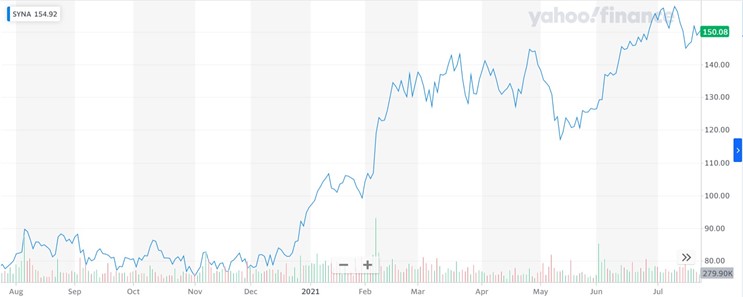
I’d say that expression, “I’d rather be lucky than good” kind of applies here, but I don’t want to trivialize the effort that went it to this, either. Almost every publicly-traded company wants to land a spot on CNBC and Synaptics was no different. But there are hundreds of companies these shows have to pick from — and that pitch them – every day. We actually started re-introducing Synaptics to the Mad Money team almost a year ago, when Synaptics was just beginning a true transformation under its new CEO. Synaptics had been on the show previously under a different CEO a while ago. So, we had some existing knowledge and relationship to work with, but it was still a matter of persistence and patience on our part. Plus we had to present a newsworthy story to the producer. Broadcast opportunities like this are all about the here and now, so timing is also key. One challenge we faced is that Synaptics is not a huge company by industry standards. But on the other hand we had a great asset to work with in CEO Michael Hurlston who is a very articulate and quotable executive. I think ultimately what enable us to get the Synaptics story told was that it was really compelling and relevant in the moment. Pivoting to new, higher growth markets, well-known customers, nice rise in stock price; and significant improvement in financial fundamentals especially profitability – this is just the type of company CNBC watchers want to learn more about. And, of course, we had the PR tailwinds of macro issues like chip shortages, Covid buying patterns, and even the China trade war – which Synaptics has insightful perspectives on – to add a sense of urgency and relevance to the story. All of that gave us a lot of ammunition to work with. It still took some time to get the commitment from Cramer’s people, but eventually our “measured persistence” paid off.
Q: Do you believe this has opened opportunities for Synaptics going forward?
Yes for sure. We already had some pretty good success with Synaptics in places like The Wall Street Journal, Barrons, Wired, Venture Beat so I think maybe that helped a bit in landing the CNBC segment. And yes, success breeds success with this type of thing. But really without a good story you don’t have a chance. Synaptics has been an outstanding stock and the Wall Street analysts have been bullish on it. So Synaptics has a great story right now. The stock price jump alone over the last year is really eye-catching. I think other media probably look at an appearance on CNBC as a bit of a validation that the company is the real deal but I’m not sure it influences them to write. I think generally Synaptics has punched above its weight PR-wise, thanks in part to our persistence and opportunistic approach, but also because their CEO ‘gets’ PR and is supportive of it. That’s a big aid in doing what we do. As long we can keep showing success and traction through new products, real innovation, customer wins and, of course financial performance, I think we can keep their visibility high, particularly because semiconductors are in vogue at the moment for all types of media.
For more of our results on Synaptics see here.
We are happy to shine the spotlight on one of our most innovative clients, Prophesee. As a point of reflection over the past few years, we wanted to chat with Mike Sottak and Rebecca Renner, the leaders of the Prohesee account.
Q: Before we get into the more important content of this interview, I am interested to know more about your relationship with Prophesee. How long have they been a client of yours? How has that relationship changed over the years?Â
A: Prophesee has been great client and we are really proud that we have kind of grown up with them. We started working with them back in 2014 when they were just getting started and we actually wrote their first press release. We had been introduced to their founder Luca Verre through a “French connectionâ€Â and there has been good chemistry right from the get-go. Since then, we have worked side by side with Prophesee as they have grown and evolved their strategy. Looking back over the past 7 years it’s impressive and rewarding to see how they have expanded and become a force in the machine vision industry. We are proud that we helped evangelize their innovative approach to vision sensing– event-based vision – and they are truly recognized as the pioneer in this space. We have had some nice results from them, from Luca participating in the World Economic Forum and getting them in Forbes to supporting their product rollouts and funding rounds -  and it’s all starting to pay off for them. We have a great internal contact we work with which makes big difference, too, and they are always willing to listen to new ideas.  It’s exciting to be partner for a company like Prophesee as they gain traction and establish themselves as a leader in their space.Â
Q: Given Prophesee has such a unique audience, how have you modeled your efforts to bring more value to them as compared to an internal PR team?Â
A: We definitely see ourselves as an extension of their internal communications and marketing team. Wired Island has a history of relationships with the high-tech media outlets, influencers and ecosystems that are relevant to Prophesee. Our global network with these influencers as well as experience with what messaging resonates most with them and is what I think brings the most value to this account. Our team is able to be flexible as their company needs and announcements ebb and flow throughout the year. I think that is a big plus for an organization like Prophesee versus a dedicated internal person. They have a seasoned team available to them on demand and we bring value to the table that they appreciate.Â
Â
Q: Around this time last year the Wired Island Team helped Prophesee announce a breakout product, Metavision Intelligence Suite How did you ensure the right audience was exposed to this announcement? And, that the messaging aligned with the company’s vision?Â
A: This was an interesting announcement because it was their first software product and really established them as being able to provide a complete solution based on their technology innovation. It was more than just a new product –it is an attempt to build an entire ecosystem around their technology platform.  And it was important for them to appeal to a much broader set of customers in different markets than we had traditionally focused on. We started by expanding our normal set of target publications to those covering the software space and not hardware. Some of the key applications also allowed us to expand their messaging to new verticals and trade magazines. We also helped the team refine their messaging beyond just a news release to their website, social media, email newsletter and more. A few years ago, Prophesee was perceived as being in a single market – automotive. Now they are viewed as a much broader solution provider across many different industries and application areas.Â
Â
Q: I also noticed you have worked with Prophesee through an impressive amount of growth in the form of funding. For a growing company like Prophesee, could you detail how those announcements are handled by a firm like WII?Â
A: For any start up, industry validation in the form of investors is important. Prophesee has had a very deliberate strategy to work with strategic investors and not necessarily just take money from anyone who approaches them. We helped create the right messages around each funding round, including the most recent one, which wasn’t a huge one dollars-wise by current standards but was super strategic in that is opened up a whole new market for them in China, and also got them the endorsement of a highly respected expert in AI. Funding announcements are fun to work on but also can be challenging especially in today’s environment when multi hundred-million-dollar rounds are becoming common. Sometimes it’s not the amount you raise that’s important, but who you are working with.Â
Â
Q: What other roles do you play with PropheseeÂ
A: We like to think our experience is an important asset for them to draw on and we offer them advice and counsel beyond just PR tactics. From a communications standpoint, we are also a content developer for them, from thought leadership articles to their web site. Awards, events and speaking opportunities are also a part of the mix. We also continue to counsel the Prophesee team on social media content and best practices. The past year has seen steady growth for their Twitter and LinkedIn accounts both in terms of quantity and quality engagements. Twitter has seen a steady growth in followers with an over 65% increase in engagement year over year. While their LinkedIn community gained over 1,000 new followers and a 40% increase in engagement. This can be attributed to the busy year they have had and as a result the increase in post pace and engagement opportunities. The executive team has continued to be active as well, which tends to nurture your online community by adding a personal touch, especially on LinkedIn.Â
Wired Island started working with a small and relatively low-key technology company recently. Avery Design Systems is in the chip design space and for the past 20 years has been quietly providing important, if not well-known to the mainstream, technology for verifying very complex semiconductor designs. While theirs is a relatively finite and engineering-oriented market, it’s still important for them to communicate effectively. Wired Island is supporting their outbound communications, through PR, content, events, email marketing and most recently we helped re-design their website and update their company brand (which had served them well for the past 20 years but was in need of a refresh). We caught up with Mike Sottak, the lead on this client to understand how Wired Island can help very specialized technology suppliers.
Q: Many people may not know who Avery is, could you give some insight as to who they are and what products/ services they provide?
A: Unless you’re in the chip business, you probably have never heard of Avery Design and maybe don’t even care. But if you use a cell phone, or laptop or any other electronic device, the role Avery plays in helping bringing those types of products to market is very important. They provide technology to the companies designing the chips that power all of our electronic devices, as well as the important infrastructure supporting data consumption, sharing and storage – like the data centers Amazon, Facebook and Google depend on. So they don’t design the chips in the way that companies such as Intel, nVidia, Qualcomm and Samsung do – but engineers at companies like those use Avery’s technology to develop their chips faster, specifically by helping them verify that the design will work as intended before they are sent to manufacturing. That’s a super important step in the chip design process and can literally make the difference between success and failure for a new product.
Q: How long have you been supporting them and what is your core value add?
A: We’ve been working with Avery since about mid-2021 but our connection with them goes back more than 20 years. I actually worked with the Avery co-founder as well as the heads of sales and marketing many years ago when we were all at a company called Gateway Design, which got merged into Cadence Design Systems – the largest supplier of chip design, or EDA (electronic design automation) tools. So chip design technology was common ground for all of us. Fast forward to this year, the head of marketing came to us and said they could use some help freshening up their image and getting more visibility. He knew we had unique and deep expertise in their particular technology, so there would be a quick learning curve and ramp-up to help them reach the audiences they wanted to. With our experience in EDA, I’d say our value is the domain knowledge about chip design for sure, plus a personal familiarity with some of the people involved. That combination has helped us hit the ground running for Avery.
Q: What is your biggest PR win with Avery?
A: As I mentioned Avery has a very specialized product line, and the scope of their potential customers is relatively small. But that makes it even more important to make sure they maintain visibility where their customers go for information. So we’ve gotten them coverage in some very niche publications that chip engineers read and rely on. For them, it’s almost as important to get in EE Times as it is to get in the NY Times! Because they have a focused market that we can target fairly precisely, we’ve also ramped up an email newsletter program for them – we can reach a lot of their existing customers and prospects efficiently through email marketing, which is still quite effective with engineering audiences. We’ve done some webinar work with them, too, again taking advantage of the very narrow focus on the target user base to deliver extremely relevant and deep tech content.
Q: I noticed your recently designed Avery’s logo, could you describe how that opportunity came to fruition? This is not something Wired Island has been known for.
A: Yes, logo updates and graphic design, in general, are not something we offer to all our clients but given the relationship with Avery and our insight into what they wanted, we wanted to participate in the brand update. Plus, we were re-doing their website so it made sense to do both at the same time. The website part of the assignment turned out to be a little more involved than we had expected but it was a good exercise for us to go through to 1) fine-tune how we work with our web developer Tim; and 2) get a broader sense for everything that Avery does. The net result was a good one and we will continue to help Avery maintain its online presence.
Q: Where do you see your relationship with Avery going in the near future, and long term?
A: Avery is not the type of company that’s going to have rocket ship growth and be breaking into brand new markets all the time. Their success has been based on consistency, quality products, and developing a loyal customer base. And as semiconductor technology permeates more and more aspects of our live, Avery’s role is really vital. It’s also important that they keep up with the relevant industry standards they help implement – protocols like CXL, NMVe, PCIe, Ethernet (yes, it’s a bit of an alphabet soup in this world), so there are always new topics and trends we want to be sure they are positioned properly around as thought leaders and also having products to support these developments. Communications-wise we want to continue to expand their visibility in the press, but also drive more into digital marketing and especially areas like SEO and lead generation. As a small company, Avery gives us an opportunity to get involved with a lot of different aspects of their marketing programs and we feel like our experience in their technology space makes us a great asset for them, too.
Click Here to see Avery’s Website.
Also, if you would like to more coverage of Avery, click Here.
All3DP highlights the growing popularity of 3D printed electronics and identifies the five most advanced companies leading the way.
Optomec was showcased for its Aerosol Jet 3D printing process that allows electronics to be printed on a wide variety of substrates, including plastics, ceramics, and metallic structures. Using this process, Optomec systems can print complex geometries to print antennas directly onto mobile device cases reducing complexity, parts count and cost.
With Intrinsic having just released a new line of products to advance Cybersecurity in semiconductors, I wanted to sit down with the Account Executive for Intrinsic at Wired Island, Toni Sottak, for an interview.
Q: Briefly, can you provide a rundown of what Intrinsic does, and their recent product announcement?
A:
Q: How long have you been working with Intrinsic ID? How how your relationship developed over that time?
A:
Q: What value do you believe you offer this type of tech company, as opposed to having only an internal marketing team?
A:
Q: What are some of your short term and long terms goals with this account?
A:




Copyright ©2026 | Wired Island PR. All Rights Reserved
Privacy Policy