
As we continue to navigate these strange times, we wanted to take a minute to recognize the tech industry's resilience. Hospitality and tourism are at the heart of the Lowcountry and that is not going to change, but this pandemic has given many of our business and government leaders pause to evaluate the need for economic diversity. Mike had the opportunity to share these important points and opportunities with The Post & Courier last week.
These days the Wired Islanders are mostly working from home, not something new to us, but last Fall we decided to set up shop at the Charleston Digital Corridor's Flagship-Bridge offices. Since then we have enjoyed getting more involved in the local tech scene and the CDC's mission. Mike caught up with the Corridor team last week to talk about Wired Island's history, what our experiences over the years have taught us about embracing change and how we think that can help today.
Although we pride ourselves on being something of a "virtual agency' and have a global client base, we like to be involved in our physical local community as much as possible. That's why we are proud to announce that DesignRush has named Wired Island International a Top 30 Digital Marketing Agency in Charleston. The recognition is not only a testament to our depth and scope of expertise in high tech marketing, but a reinforcement that Charleston is an emerging national technology hub. Research firm CompTIA recently ranked Charleston #4 in the nation for net tech employment jobs added in 2021. Charleston consistently ranks highly as an attractive place to live, work and invest in if you are in the high-tech field. Our presence helps expand the ecosystem of resources that are participating in the growth of the sector here in the Lowcountry of South Carolina, and we are actively involved with groups like the Charleston Digital Corridor and TEDxCharleston to help support the tech vibrancy happening here.
As the only local independent communications agency with deep experience for tech driven companies, Wired Island adds a unique resource to the Charleston tech scene to help both emerging and established companies with a presence in this market, particularly if they want to build awareness on a national or international level. We work with B2B tech companies around the world in industries such as semiconductors, electronics, enterprise software, artificial intelligence, manufacturing, autonomous vehicles, automotive and others to develop and deliver effective communications strategies to meet key business goals.
As our market for clients is niche " serving mainly B2B deep tech companies " our inclusion on DesignRush plays a notable role in connecting businesses with the best agencies to fit their needs.
The communications discipline has evolved over the years and Wired Island has grown with it. Built on a long track record of success in traditional PR and earned media, we have integrated additional relevant skills and services to ensure our clients' messages stand out in today's dynamic environment.
An abbreviated version of this commentary has been published at The Post and Courier. The full version is below.
"...the COVID-19 pandemic will encourage people"entrepreneurs, investors, and employees"to consider opportunities outside of the coastal tech hubs. People who have been considering a move, to tap into the sector expertise that exists in many parts of the country, or for a lifestyle change, or to be near family and friends, may choose this moment to relocate, accelerating a talent boomerang, and helping emerging startup cities rise."
-Steve Case, Tech entrepreneur and investor
Two recent headlines in the same issue of The Post and Courier caught a reader's attention for the seeming dichotomy in message. One story reported on the mounting job losses in Charleston's tourism and hospitality sector as a result of the pandemic, while the other spoke about a locally based tech company whose business was barely impacted by the Covid-19 crisis.
In the case of the latter, no jobs were cut and the company quickly pivoted to a work-from-home model to maintain business continuity. On the other hand, we know all too well the situation with the hospitality and services industry which is so critical to our local economy, and a source of pride and enjoyment for us who live here.
The situation plays out the same on a national level. While unemployment figures set new records, largely fueled by layoffs and furloughs in services and retail, the tech industry has weathered the storm with far less damage. The site Layoffs.fyi tracks tech layoffs and shows roughly 44,000 job losses nationwide from tech startups since March 11. This compares to more than 30 million jobless claims nationwide in the same time frame. In tech, many established Silicon Valley stalwarts have leaned on deep cash reserves to adopt a no-layoff policy and others are actually hiring to address opportunities presented by the crisis.
To be fair, the economic impact of the pandemic is still unfolding and many sectors of the tech industry will undoubtedly suffer. Recent layoffs at locally based Benefitfocus serve as a poignant reminder no company is completely immune. But generally tech companies are better positioned to withstand the Covid-19 challenge (See recent earnings from the likes of Facebook, Google, Microsoft and Amazon), and indeed emerge stronger through opportunistic innovation and nimble operating models. Others that contract or fade away will do so largely as a result of a "thinning of the herd' effect that has always guided tech's Darwinism ethos.
The services industry is valuable but vulnerable
Here in Charleston, the services industry situation is difficult and personal, albeit unavoidable during this unprecedented time. Almost everyone likely knows someone who has lost a job at a restaurant, bar or hotel here in town, probably more often than knowing a victim of the virus itself. Much credit is due to the local industry's stellar internal support infrastructure and creative thinking already being applied to help ease the pain. From ambitious take-out offerings to innovative fundraising schemes, the industry is showing grit and resolve that is admirable.
There's still no telling how big an impact the Covid-19 crisis will have on our tourism economy but estimates of a $500 million hit or more are not unrealistic, especially considering the pandemic hit during a peak visitor season. Further frustrating matters, unlike previous high impact events such as storms, this situation is global and Charleston's recovery will be paced largely by factors beyond our control " restrictions on travel and social interactions, the health of airlines, government economic recovery programs, and indeed the unpredictable course the virus itself continues to take. This not only impacts workers sidelined by closings, but also the city coffers which rely on this golden goose to fund needed services, programs and infrastructure. Recent estimates predict that close to $30M in direct tourism-related income for the city could be lost.
Economic diversity is key
While we all want our hotels, restaurants and attractions back and running as soon as possible, we were heartened to see Mayor Tecklenburg's 3 Step pandemic recovery plan call out the need to embrace a multi-faceted economic development strategy, with a focus on "delivering more resilience through greater diversity."
In particular, continuing to develop a robust tech and digital economic sector is not only wise, but especially timely and necessary given the current circumstances. Indeed, Charleston is well positioned to take advantage of a number of trends being accelerated by Covid-19 and that line up well with the needs of an innovation economy.
Flight from big cities: The coronavirus has caused many urban dwellers to rethink the appeal vs. risk of living in crowded environments, which are both costly and, during times like this, more susceptible to health risks. A recent Harris Poll showed that 39% of urban dwellers said the COVID-19 crisis has prompted them to consider leaving for a less crowded place. Factor in high cost of living and quality of life factors, and places like Charleston become even more appealing in the post-pandemic world. For tech specifically, large concentrations of tech savvy workers in cities like New York, Boston and San Francisco may use this as an excuse to look for more attractive living options (Mark Zuckerberg famously said recently that if he were to start Facebook all over again today, he wouldn't do it in Silicon Valley). In fact, some states are offering cash incentives to families who move to their locales and work remotely.
Building on the Charleston tech foundation
These and other trends argue in favor of doing even more to position Charleston as a welcoming and supportive partner in furthering the technology ecosystem here. A recent article in the Harvard Business Journal outlines three key ingredients to a tech-friendly development strategy:
Charleston already ticks a lot of the boxes, with a strengthening computer science department at the College Charleston (and an already strong pipeline from nearby USC and Clemson); a diverse talent pool that can be developed and/or attracted to build a more complete workforce; and some needed steps in motion to improve infrastructure (which includes upgrading to 5G, sorry conspiracy theorists). While there are a growing number of other viable options in our region to set up a tech shop or relocate yourself (e.g. Raleigh, Atlanta, Nashville, Orlando), Charleston's position is enviable and rich with opportunity.
And the onus should not just be on the government. In fact, the same HBR article points out that "business leaders interested in having a civic impact should instead roll up their sleeves and collaborate with political leaders to invest in basic infrastructure and leverage diverse talent to help foster vibrant ecosystems."
On top of that, let's face it: it's a pretty great place to live. That alone is a differentiator for Charleston's attractiveness and an ace in the hole for efforts to create more economic diversity. We can thank the services industry for a big part of that allure and charm, as it serves as a hook to attract talented people who can increasingly live and work anywhere.
To be sure, great progress has been made with initiatives at the city, regional and state levels, and on both the public and private side. One need only look to the success of the Charleston Digital Corridor to see the potential of developing a true tech community here that can feed off itself and fuel further growth and entrepreneurialism. On top of enabling important resources such as skills training, job listings and professional development, the CDC is a good bellwether for the health of the tech community here, tracking nearly 500 local tech operations. Among its most telling statistics is the rise in average tech salaries locally " reaching $93,000/year in 2019, double that of the average general salary in all other industries in Charleston.
The Charleston Tech Center rising from Morrison Ave., due to open by year's end, is another tangible sign of more progress and a physical testament to the economic value potential of such use of space. It will stand as a beacon to entice more tech investment to Charleston and we hope it's not the last structure of its kind to stand alongside the many hotels and apartment buildings piercing our downtown skyline.
The hospitality and tourism industry will always be the heart and soul of Charleston and quite literally put our city on the international map. But the current crisis shows how vulnerable it can be, warning us of the danger of becoming too reliant on one engine. And, by having other resilient economic drivers, it will also help accelerate the recovery of our bread-and-butter industries which are suffering now. Investment and growth in other sectors provide us with needed diversity that can help us weather storms such as the one we are in and strengthen our economic foundation for the long term.
COVID-19 is disrupting lives and businesses around the world at an unprecedented level. As we all stay at home and try our best to social distance " we are doing our part to help mitigate the negative impact of this pandemic. But, this feels counterintuitive. We are in the service business, accustomed to being proactive. It's in our nature to be action oriented. For the last three decades we've been working with technology companies that have been causing disruptions " so it feels very strange to now be impacted by the biggest disrupter of all.
As we've learned from our tech clients " challenges are really opportunities to devise new and better solutions. Entrepreneurs are used to thinking this way but it can also hold true for the rest of us. And, many experts are looking to tech to help get us back on track.
Whatever the view is about what happens next, it's important not to lose sight of what we do now. The global pandemic is impacting local, national and international economies dramatically. In Charleston it is especially painful to see the local economy close down because so much of our daily life revolves around small businesses.
As a small business ourselves, we want to contribute to helping our local economy recover and rebuild. In times like these, it is important for all of us to share what we can. It is in this spirit that we want to contribute to the recovery process and offer our creativity, experience and ideas to other companies and to help them devise effective communications strategies for these difficult times.
If you are looking for a professional team of communications professionals to sound out your communication strategy " we are here for you. We would like to offer you our expertise, advice and input free in a one-hour consulting session. During crisis circumstances, it's difficult to know what to say, to whom, and when and we often want to just say nothing. However, communication during a crisis is an essential part of the recovery process and can lead to new ideas and innovations that can be implemented post-crisis. We would love to help strategize your communications process and leverage it to emerge from this stronger and more connected. While we primarily work with B2B technology companies, we are open to talking with any business and if we can't provide expertise or insight we can leverage our network to find someone who can help.
Fill Out Our Form To Schedule A Session >>
We are all working through these unprecedented times, attempting to conduct business-as-usual as much as possible. At Wired Island we feel lucky to have a still-active client base (even if they are mostly working from home!) and a team experienced in remote working to keep our eye on the ball. Even if you are able to keep your business relatively on track while following government and CDC guidelines, most stakeholders are expecting some sort of adjustment or acknowledgement. Several of our clients have asked if they need to communicate about COVID-19 and the best way to do so. While there is no case-study or best practice to look to on this one, we think a few valuable crisis communication lessons can be applied.
Identify Your Key Audiences And Where They Are
These two steps are a key part of any marketing strategy, but come into focus even more when dealing with sensitive topics. Your employees versus your customers versus your investors may have different questions. A general crisis communications rule is to lean towards more over communication rather than waiting. We understand that the situation is changing every day, and therefore your decisions may change, but waiting to communicate could add even more tension to these stressful times. Identify the information each audience needs.
You also need to decide what channels you will use to communicate. Social media and employee chat platforms are a good option to be able to give frequent updates. Keep your web site up to date with dynamic information. If you are announcing a closing or something more serious, you may want to consider email or something more formal, such as a public statement or press release.
Identify Spokespersons
It is critical to have information come from a select group of approved (and, ideally, speaker-trained) sources during a time of crisis communication. While many businesses are not yet finding themselves in crisis mode, we have already seen the harm being done from misinformation about COVID-19 online and on social media. The same can be applied to your business if your stakeholders are left to speculate about various business decisions. Having communication come from one key source like HR or your CEO, will give stakeholders confidence in the message and therefore their situation.
Form A Response
We do not have a checklist of things your business needs to address when communicating about COVID-19, every situation is different based on geography, company size, industry and more. Your stakeholders want to know that you are putting their health and safety first, and are monitoring the situation closely. Make sure your actions reflect what you say, another big lesson in crisis communications.
Now is the time to make a plan and formulate a response for if your business were to be directly impacted. This is not to create panic, but to be prepared. We work with many great clients during times of success to plan for not if, but when a crisis communications plan will need to be activated.
Go Old School: Pick Up The Phone
As many companies shift to a work at home model, there are new social and communications dynamics to understand. Unlike in an office setting where physical interaction, even just a random passing in the hall, gives you reassurances of a person's well being and presence, working remotely can be lonely and not offer the instant satisfaction of live contact. Email and text messaging is great and efficient, but sometimes a human connection - voice-to-voice or a video chat, can make a world of difference in clear communications and empathy during these difficult times. So go ahead - pick up the phone and call a colleague, your boss, a customer, or partner.
As an international business ourselves, we are working with clients in all different circumstances around the world. We know this is a confusing time, and we want to let our Wired Island clients, partners and friends know not to hesitate to reach out with any questions or communications needs. A final reflection on our crisis communication lessons is to not feel like you have to have all the answers. Especially in this unprecedented time, your audience is not expecting the perfect response. We hope this will not hold you back from communicating often and well.
Hurricane season is always a tricky and difficult time. All the preparation and worry before the storm, and the follow up after can be costly - both in terms of time and money. Fortunately, so far this year, our hurricane distraction factor has been low and we are happy to report that the Wired Island team came out fairly unscathed by Dorian. We experienced a few down trees and high water levels, as did most of the Lowcountry. In fact our very own Mike Sottak was on the scene to give an update to the local Live 5 News teams. We frequently help our clients prep for interviews, but don't often find ourselves on the other side of the camera! After a few power outages and a couple days of clean up, we are happy to be back to business as usual.
Unfortunately, our friends in the Bahamas however, we're not as lucky. The reports and images coming out of the islands are devastating. As Islanders, our heart goes out to all those who were in Dorian's destructive path. Many lost everything and it is truly hard to comprehend how to go on from that. This type of event can also make those who were not impacted feel overwhelming and helpless when thinking about how to help. So much needs to be done. That is why we wanted to share a few ways you can help make a difference. Here are just a few of the great fundraisers and organizations we are hearing about in the Charleston area and beyond that will benefit the people in the Bahamas who lost so much. We know any small amount can help. Thanks for taking a look, and send us a note if you know of any others.
Prophesee had a busy Fall with the announcement of a new round of funding and the release of their Metavision sensor, the first industry-standard packaged chip that leverages Event-Based Vision technology, a significant advancement over traditional frame-based vision approaches. Wired Island has worked with Prophesee for several years and different phases of the company, and was excited to share the news about this next chapter.
The Wired Island team helped to develop the press release, media relations plan, social media content, and other announcement materials around the release of Metavision. The team regularly promotes the benefits around Prophesee's event-based vision approach, but this represented a major milestone for the entire computer vision industry in being available in an industry-standard package. Wired Island was able to arrange briefings the week prior to the announcement in various trade and tech publications such as EETimes. The news was even picked up by popular engineering blogs such as Image Sensors World and ChipsNWafers.com which called Metavision "Powerful Image Detection & Capturing Sensor For Next Generation Of Cameras".
Riding the momentum of the sensor release, Prophesee announced the closing of $28M in funding, bringing their total investment to date to $68M. The announcement was widely covered in French and English publications. The news was covered by print, broadcast, and even podcast outlets. The funding will allow the company to continue the commercialization and accelerate the industrialization of their solutions in key sectors. Coverage and round-ups continue to roll in around both events, and we are pleased to see Prophesee enjoy this additional recognition they have worked for many years to achieve.
If you have a product or funding announcement coming up, drop us a line, or read more about our media relations expertise.
Advances in additive manufacturing have allowed for improvements in industries ranging from energy and aerospace to medical and automotive among others. Getting to tell these unique and interesting stories is one aspect of what makes our work with clients like Optomec so rewarding.
Optomec’s customer, University of Nebraska-Lincoln (UNL), is a great and recent example. UNL’s groundbreaking work to develop dissolvable metal components for medical implants with Optomec’s LENS system has caught the attention of the trade media and promises to bring far-reaching benefits to patients and their families.
When it comes to surgery and orthopedic needs, we’ve come a long way with technology but there is still much to be improved upon. These treatments are often invasive, costly and sometimes require multiple surgeries. The critical problem with current orthopedic implants is that the pins, plates and screws are made with titanium, stainless steel, or cobalt alloys, which are permanent and often have a high complication rate because they are still (causing “stress shielding”) and require removal with a secondary surgery, which is costly and places undue suffering on patients. This is the issue the UNL team has been addressing and is hoping to alleviate through the diverse capabilities provided by hybrid additive manufacturing.
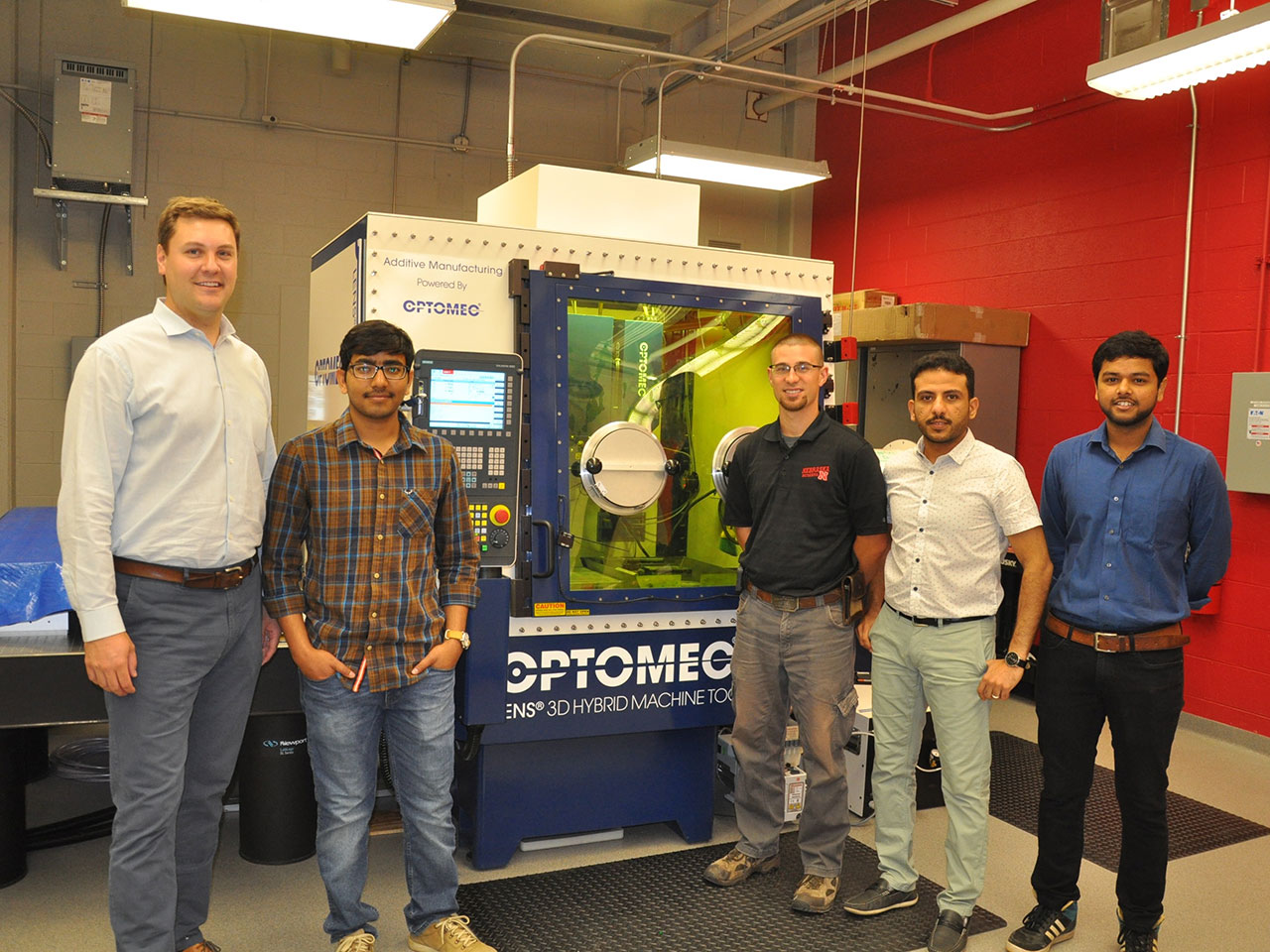
UNL is using a LENS Hybrid Controlled Atmosphere System from Optomec to develop dissolvable magnesium components that have the potential to dramatically alter the design and manufacture of next-generation medical implants. With Optomec’s LENS, UNL is applying a hybrid additive manufacturing process to control the disintegration of medical fasteners and plates so they stay intact long enough to serve their purpose and then degrade away once the bone is healed.
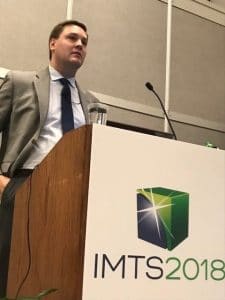
Wired Island created a PR campaign around this story to get attention for this important research and Optomec’s powerful capabilities. Timed around the IMTS trade show enabled us to connect in person with many potential customers and journalists.
The campaign garnered attention key, relevant trade outlets. More than 25 articles were written in September alone including: Digital Engineering and 3DPrint.com. Coverage continued to trickle in over the months in technology trade press and verticals in the medical field. The story has resonated so much that journalists have continued to show interest in what Optomec and additive manufacturing can do for the medical field nearly a year after the initial announcement as shown in Materials Today and Additive Manufacturing.
In today’s fast-paced and competitive news cycle, it’s not common for a story to stick around for so long. We’re proud of the on-going results this campaign has garnered and continues to generate. For more on getting the most out of your media relations campaigns, visit our page.
Next time you go to buy a cell phone - think about it and consider buying refurbished. This is the mission of our client Back Market. And, it's efforts to make all of us more conscientious consumers and supporters of the circular economy has won the company industry recognition. Back Market has earned the standing of number 2 on the 2019 Most Innovative Companies List in Europe. The list honors the businesses making the most profound impact on both industry and culture, showcasing a variety of ways to thrive in today's volatile world. Wired Island identified this opportunity last Fall and worked with our client to write and submit the application.




Copyright ©2026 | Wired Island PR. All Rights Reserved
Privacy Policy